Technical Frontiers for Research Engineering
A frontier reference note mapping technical territories, representative companies, research-engineering approaches, day-to-day MTS work, and high-potential opportunities.
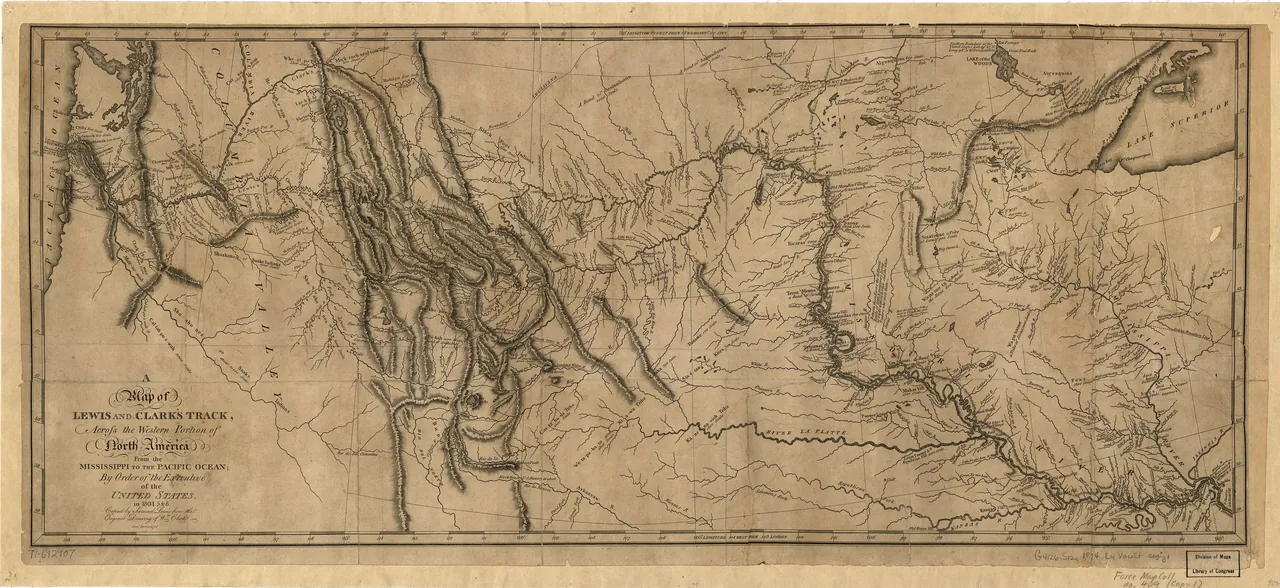
This note is a compact reference map for research engineering across the frontier AI landscape. The point is not to be exhaustive, but to make the technical territories legible: what the frontier is, which companies and labs are representative, what the research-and-engineering work actually looks like day to day, and where the high-upside open territory still sits.
The company lists below are representative, not a strict audited valuation screen. They are included to give directional signal about where the work is happening, not as a canonical market map.
01 Algorithms, evolutionary algorithms, information theory, complexity
- Representative companies / labs
- Google DeepMind, xAI, FAR AI, Mithril, Flapping Airplanes, Thinking Machine Labs, Reflection AI, Recursive Intelligence, humans&, webAI.
- Research & engineering approach
- LLM-driven evolutionary code mutation in the AlphaEvolve style; information-theoretic compression bounds; automated complexity analysis for next-generation scaling.
- MTS / research engineer roles
- Mutate Python and systems code with LLM agents on GPU clusters; run evolutionary search loops; derive or prove sub-quadratic bounds; benchmark new algorithms against theoretical limits.
- High-potential territory notes
- Algorithmic efficiency breakthroughs with 10-100x gains remain wide open. This is especially strong territory for theory-heavy engineers building 2027-era inference engines.
02 Machine learning theory
- Representative companies / labs
- Meta AI, Microsoft Research, Scale AI, Cohere, Mistral AI, Databricks, Perplexity, Cursor, Glean, Imbue.
- Research & engineering approach
- Scaling-law ablations at frontier scale; double-descent and generalization analysis; empirical theory through massive controlled experiments.
- MTS / research engineer roles
- Design and run large ablation suites; derive new bounds; analyze failure modes on production models; collaborate on theory-to-architecture papers.
- High-potential territory notes
- Theory-to-practice is accelerating. High-return work lives where theoretical results directly unlock architecture, optimization, or evaluation changes.
03 Probabilistic models, diffusion, flows, variational inference
- Representative companies / labs
- OpenAI, Runway, ElevenLabs, Stability AI, Adobe, Pika Labs, Luma AI, Kling AI, Midjourney, Synthesia.
- Research & engineering approach
- Flow matching plus hybrid autoregressive-probabilistic generation; advanced variational inference for uncertainty in video and audio systems.
- MTS / research engineer roles
- Train and evaluate diffusion or flow models on petabyte-scale datasets; implement custom flows in JAX; optimize ELBO-style objectives; A/B test sampling strategies.
- High-potential territory notes
- Text-to-video, text-to-3D, and probabilistic generation remain explosive. Enterprise-grade uncertainty quantification is still an underbuilt commercial niche.
04 Causal inference, counterfactuals, causal representation learning on text and mechanistic interpretability
- Representative companies / labs
- Anthropic, Causaly, Aitia, Neuronpedia, Apollo Research, Goodfire, Allos, Elicit, WhyLabs, Credo AI.
- Research & engineering approach
- Circuit-level causal interventions; counterfactual editing at scale; interpretability pipelines for frontier LLMs.
- MTS / research engineer roles
- Run activation patching and intervention experiments; build causal graphs from model internals; scale sparse autoencoders; audit for deception and failure modes.
- High-potential territory notes
- Mechanistic interpretability is becoming production-critical for safety, and causal AI in enterprise decision systems is turning into a serious regulatory moat.
05 Continual learning, memory models, reasoning, enterprise search and memory
- Representative companies / labs
- Databricks, Mem0, MemGPT, LangMem, Pinecone, Weaviate, Chroma, Zilliz, Qdrant, Vectorize.
- Research & engineering approach
- Sparse memory cartridges, test-time training, continual fine-tuning without forgetting, and RAG 2.0 memory architectures.
- MTS / research engineer roles
- Design memory-augmented training loops; mitigate catastrophic forgetting; integrate vector and graph search for long-horizon agents.
- High-potential territory notes
- Enterprise memory and personalized RAG at scale live here. Continual learning is one of the clearest paths to never-retrain personalized AI.
06 Reinforcement learning
- Representative companies / labs
- Physical Intelligence, Skild AI, Covariant, Apptronik, Agility Robotics, 1X, Boston Dynamics, Figure AI, Tesla Optimus, and adjacent robotics labs.
- Research & engineering approach
- RL and world-model hybrids; sim-to-real transfer at scale; reward modeling through human preference in robotics settings.
- MTS / research engineer roles
- Design reward functions in high-fidelity simulators; train policies in Isaac Gym or MuJoCo; run large RL workloads on GPU or TPU clusters; debug credit assignment in deployment.
- High-potential territory notes
- RL plus world models is one of the strongest candidates for the next reasoning leap. Humanoid robotics remains a very large, still-open market.
07 Advanced deep learning and multimodal AI
- Representative companies / labs
- Meta AI, Microsoft, Runway, ElevenLabs, Adobe, Perplexity, Cursor, Harvey, Glean, Imbue.
- Research & engineering approach
- Joint cross-modal alignment at scale; multimodal scaling laws; vision-language-action integration.
- MTS / research engineer roles
- Build and train multimodal datasets and pipelines; align embeddings across text, video, and audio; optimize production quality-latency tradeoffs.
- High-potential territory notes
- Video and audio multimodality are still early. Enterprise multimodal systems across documents, video, and voice remain an underbuilt vertical.
08 JEPA, world models, state-space models, audio, vision
- Representative companies / labs
- World Labs, AMI Labs, Cartesia, NVIDIA, Physical Intelligence, Skild AI, Runway, ElevenLabs, Luma AI, Pika Labs.
- Research & engineering approach
- JEPA-style predictive embeddings for physics understanding; SSMs for efficient long-sequence modeling; persistent 3D world simulators.
- MTS / research engineer roles
- Train JEPA and SSM architectures on large video corpora; build physics-grounded simulators; optimize state-space models for real-time inference.
- High-potential territory notes
- World models with physics and causality are a post-LLM frontier. SSMs continue to beat transformers in some long-context efficiency niches.
09 High-performance machine learning, inference, performance, scaling
- Representative companies / labs
- NVIDIA, Groq, Cerebras, SambaNova, CoreWeave, Broadcom, AMD, AWS Trainium, Graphcore, Tenstorrent.
- Research & engineering approach
- Custom silicon plus kernel co-design; MoE routing at million-token scale; quantization and distributed inference optimization.
- MTS / research engineer roles
- Write CUDA or Triton kernels; optimize model parallelism and quantization; benchmark inference on large clusters; scale training runs and performance instrumentation.
- High-potential territory notes
- Inference-cost collapse is one of the 2026 gold rushes. The custom-silicon plus software-stack layer still has large headroom.
10 Agents and multi-agent systems, including enterprise orchestration
- Representative companies / labs
- Sierra, Cognition AI, Harvey, Adept, Imbue, MultiOn, Lindy, E2B, Aider, Replit Agents.
- Research & engineering approach
- Multi-agent orchestration frameworks; self-improving agent loops; tool use with long-horizon planning.
- MTS / research engineer roles
- Build and test multi-agent collaboration systems; implement tool calling and reasoning loops; evaluate long-horizon production success rates.
- High-potential territory notes
- Autonomous agents are moving from demo to enterprise production. Multi-agent coordination for complex workflows remains very open.
11 AI for social science, simulation, user behavior modeling
- Representative companies / labs
- Databricks, Improbable, Socialtrait, Microsoft Research, Scale AI, Elicit, WhyLabs, Credo AI, Numerai, PredictIt AI tooling.
- Research & engineering approach
- Generative social simulations; agent-based user-behavior modeling; synthetic data for social science at scale.
- MTS / research engineer roles
- Run large social simulations; calibrate agent behavior against observed user data; analyze emergent phenomena in closed-loop systems.
- High-potential territory notes
- AI-driven social simulation for policy, marketing, and planning is still early but high-impact. Privacy-safe synthetic data is a defensible angle.
12 Statistical inference, uncertainty, prediction markets, conformal methods
- Representative companies / labs
- Microsoft Research, Numerai, Polymarket AI tooling, Manifold, Kalshi, Aitia, WhyLabs, Credo AI, Scale AI, Databricks.
- Research & engineering approach
- Bayesian inference at large scale; conformal prediction; prediction-market aggregation with calibrated uncertainty.
- MTS / research engineer roles
- Implement uncertainty estimators; run statistical calibration experiments; design conformal prediction sets; integrate them into forecasting and market systems.
- High-potential territory notes
- Uncertainty and prediction markets are becoming more important as agentic systems spread. This is high-signal territory for forecasting and finance startups.
13 Embodied AI and physical-world interaction
- Representative companies / labs
- Figure AI, Skild AI, Physical Intelligence, Covariant, Apptronik, 1X, Agility Robotics, Boston Dynamics, Tesla Optimus, Waymo.
- Research & engineering approach
- Vision-language-action models; sim-to-real RL plus world-model transfer; hardware-software co-design for physical agents.
- MTS / research engineer roles
- Train policies in high-fidelity simulators; deploy and iterate on physical robots; debug sim-to-real gaps; optimize for safety and compliance.
- High-potential territory notes
- Embodied AI, humanoids, and manipulation remain one of the biggest long-range markets. Sim-to-real transfer and safety remain the central bottlenecks.
Settled · 21 Apr 2026
Disagree, or know something I missed? Write to mepc3197@columbia.edu · the title goes in the subject line
Related
- Complex Systems, Not Integrations: What Forward-Deployed/AI Engineering Is Missingessayscience · engineering
- Daybook, 1 September 2026dayengineering
- Daybook, 21 August 2026dayscience